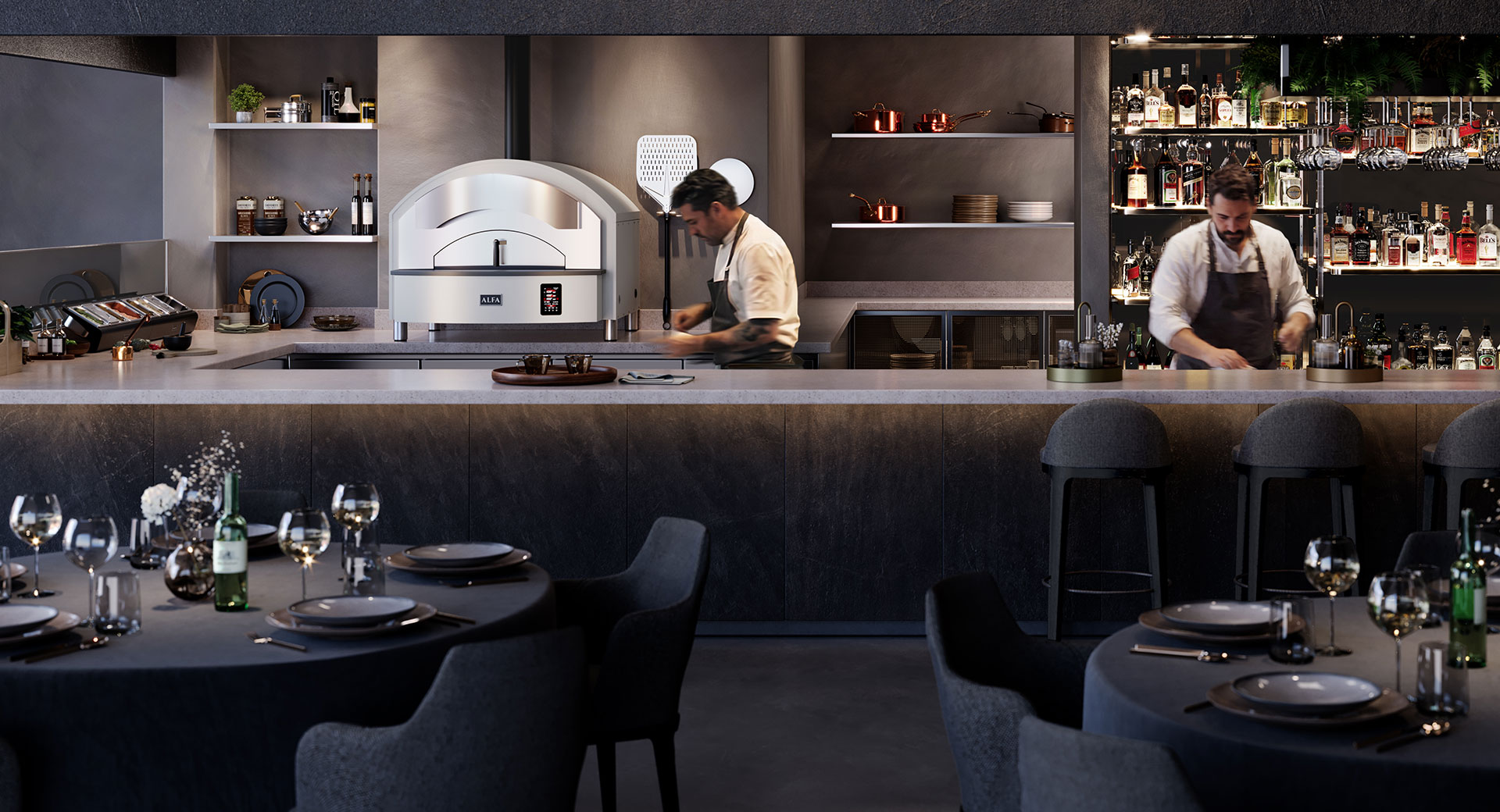
When people think of Neapolitan pizza, the first image that often comes to mind is a wood-fired oven, with a live flame and a pizzaiolo constantly monitoring the bake.
Wood-fired ovens remain one of the options most closely associated with tradition, but today they are not the only choice. Neapolitan pizza can also be baked in professional gas or electric ovens, provided they are designed to reach high temperatures and manage heat effectively.
In fact, the oven’s actual performance matters more than its fuel source. To achieve a well-risen pizza with a light, airy crust and a base that cooks in just a few seconds, you need a suitable refractory stone floor, a stable temperature, and the right balance between the heat coming from below and the heat in the upper part of the chamber.
The choice of oven should therefore begin with the pizzeria’s practical needs. How many pizzas need to be prepared during service? How much space is available? Can a flue be installed? How much electrical power is available on the premises?
Answering these questions helps identify the most suitable oven, rather than basing the decision solely on tradition or the stated maximum temperature.
Are there flueless ovens for baking Neapolitan pizza?
Yes, electric ovens for Neapolitan pizza are available that do not require a flue for extracting combustion fumes.
Unlike wood- or gas-fired ovens, electric ovens do not burn fuel. This can make installation easier in settings where building a traditional flue would be difficult, expensive, or incompatible with the structure of the building. This is often the case in historic city centres, shopping centres, food halls, hotels, or venues located within existing buildings.
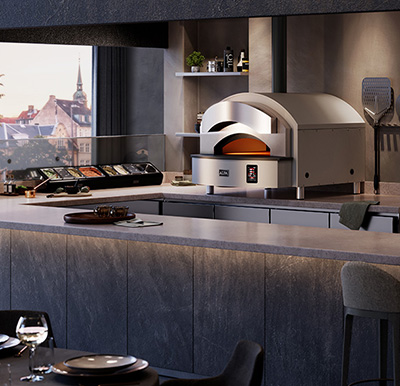
However, talking about flueless ovens requires an important clarification. The absence of combustion does not necessarily mean that the premises can operate without an extraction or ventilation system. Baking pizza still produces heat, steam, odours, and food-related particles.
Before installing a professional electric oven, it is therefore important to check the requirements that apply in the location where the pizzeria operates. Regulations may vary from one country to another and, in some cases, even between different cities. Beyond the technical and regulatory considerations, choosing an electric oven offers several practical advantages. There is no need to purchase and store wood, no flame to manage, and baking settings can be reproduced more consistently.
For this reason, electric ovens are often considered for new openings, chains, scalable concepts, and pizzerias looking for a baking process that is easier to standardise.
How to bake Neapolitan pizza in an electric oven
Baking a good Neapolitan pizza in an electric oven is not simply a matter of setting the oven to the highest possible temperature.
The first factor to monitor is the temperature of the oven floor. The refractory baking surface must store enough heat to cook the base of the pizza quickly without burning it. At the same time, the top of the oven chamber must provide enough heat to help the crust rise and develop an even colour.
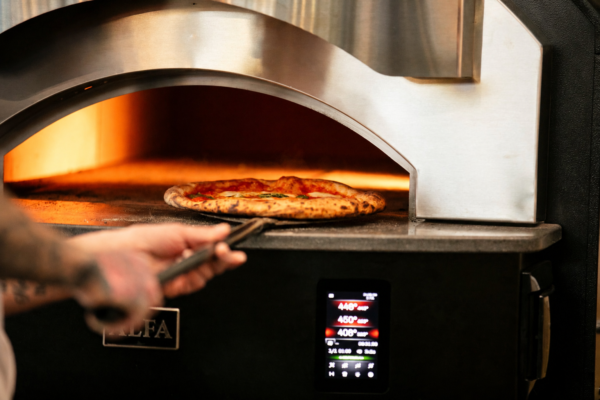
In professional electric ovens, the ability to adjust the top and bottom heat independently allows the pizzaiolo to find the right balance for the dough being used. A higher-hydration dough, a particularly moist topping, or dough balls stored at different temperatures may require slight adjustments to the settings. The same applies during a busy service, when repeatedly opening the oven and continuously loading pizzas can affect temperature stability.

Before starting service, it is important to allow the oven enough time to fully heat not only the air inside, but also the refractory floor and the entire baking chamber. Accurately checking the temperature helps prevent situations in which the display shows the desired value while the oven floor is not yet ready.
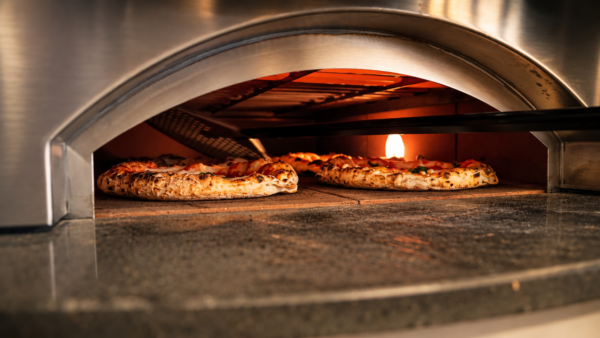
During baking, the pizzaiolo can assess the result by observing the base, the crust, and the baking time. If the underside colours too quickly, it may be necessary to reduce the power of the oven floor. If the crust struggles to rise or remains too pale, the top heat can be adjusted instead. A well-designed electric oven therefore allows for precise control, but the pizzaiolo’s experience remains essential.
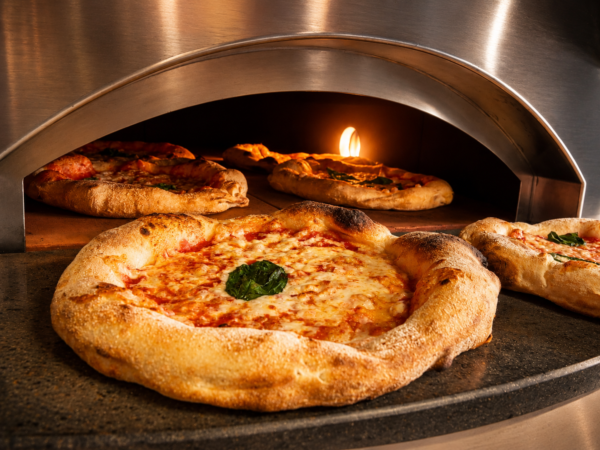
Dough preparation, fermentation, dough-ball temperature, and the amount of topping all affect the final result just as much as the oven itself.
Anyone wishing to use specific certifications or designations should also consult the relevant regulations and verify whether the chosen oven model has been approved.
What are the best ovens for Neapolitan pizza?
There is no single best oven for every pizzeria. The best oven is the one that suits the type of venue, the expected production volume, and the pizzaiolo’s way of working.
A small pizzeria with a limited service will have different needs from a venue producing hundreds of pizzas every evening. Likewise, a restaurant looking to add pizza to its menu may prioritise a compact design and ease of use, while a specialist pizzeria will require greater capacity and faster heat recovery.
Key factors to consider include the maximum temperature, the quality of the refractory baking surface, the ability to adjust the top and bottom heat independently, and the oven’s capacity to maintain consistent performance during continuous use.
It is also important to consider the space required, the available power supply, energy consumption, maintenance, and access to reliable technical support.
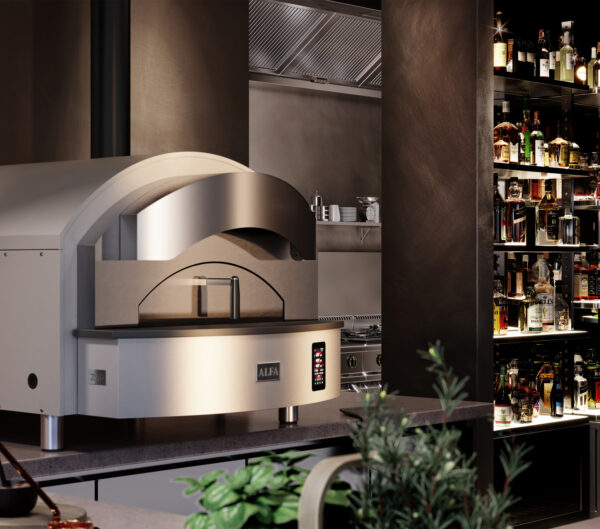
For those looking for a professional electric oven for Neapolitan pizza, Alfa Forni’s Zeno series has been developed to reach temperatures of up to 500°C and provide independent control of the upper and lower heat. Customisable programmes make it possible to save different baking settings and adapt the oven not only to Neapolitan pizza, but also to other styles featured on the menu. This can be particularly useful for restaurants offering several types of pizza or for multi-location concepts that need to reproduce the same results consistently across different sites.
The range includes models with different capacities, allowing operators to choose the most suitable oven based on production volume and available space.
Electric power also eliminates the need to manage fuel and can make it easier to incorporate the oven into many urban restaurant projects.
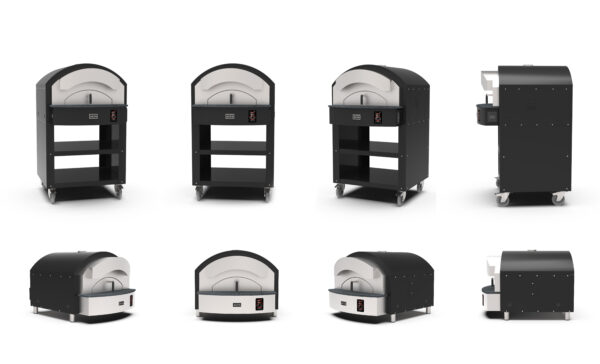
Before making a decision, it is advisable to compare models not only by their theoretical pizza capacity, but also by considering the actual pace of service, the type of dough used, and the organisation of the workstation.
The oven is one of the most important investments for a pizzeria. Choosing it carefully means creating the right conditions to work more efficiently, achieve more consistent results, and support the long-term growth of the business.